

Case update: | Shandong, China | Solid wood kitchenware
Four JXH AI Machines for Wooden Spoons, Spatulas and Lids
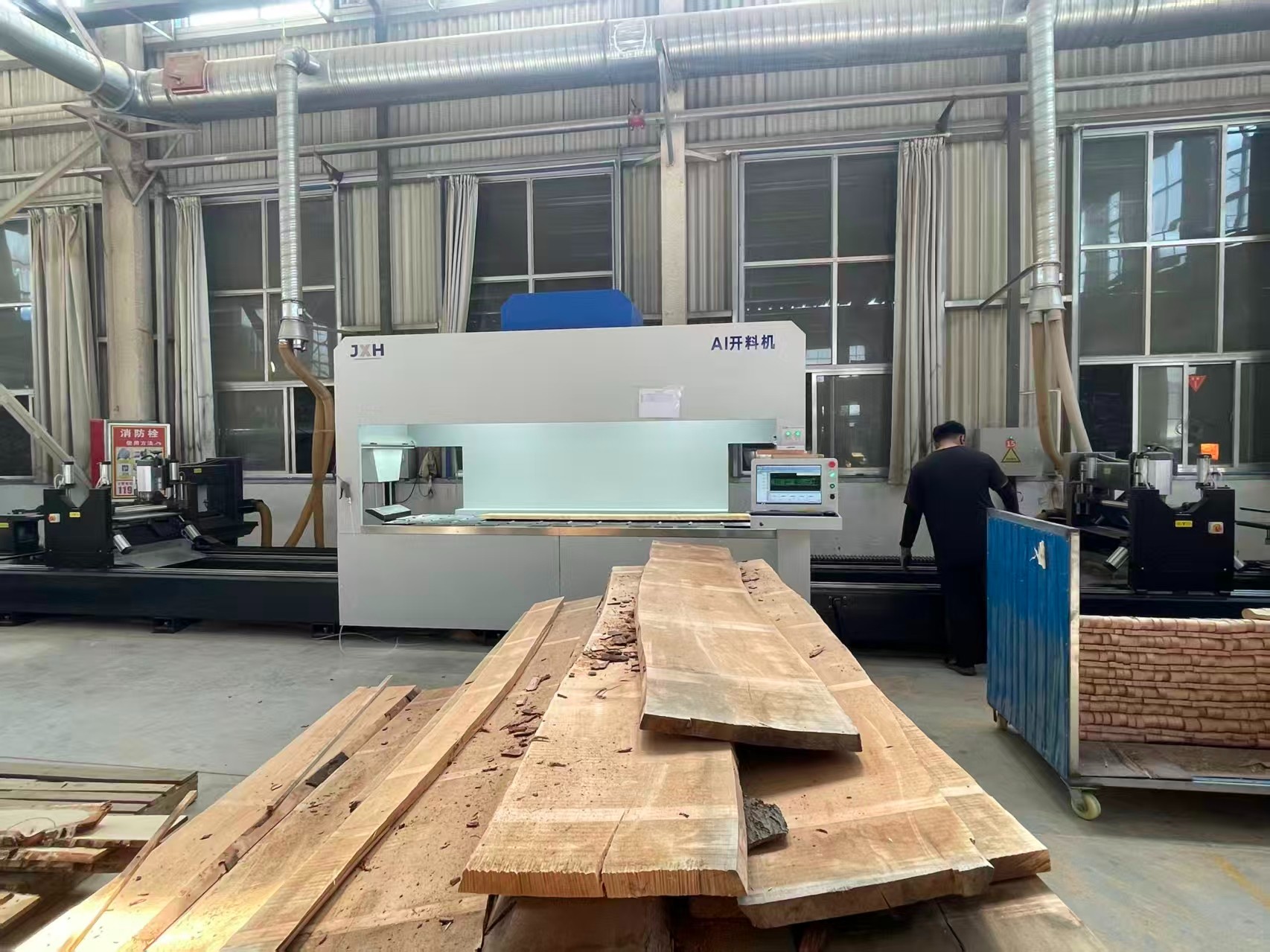
Preparing a wooden spoon blank traditionally means marking its outline, crosscutting the stock, following the profile on a band saw and then copy shaping. Each stage affects material use, staffing and the work left for the next machine. A Shandong kitchenware manufacturer has reorganized this preparation process around a combination of JXH AI Cutting Machines and AI CNC Routers.
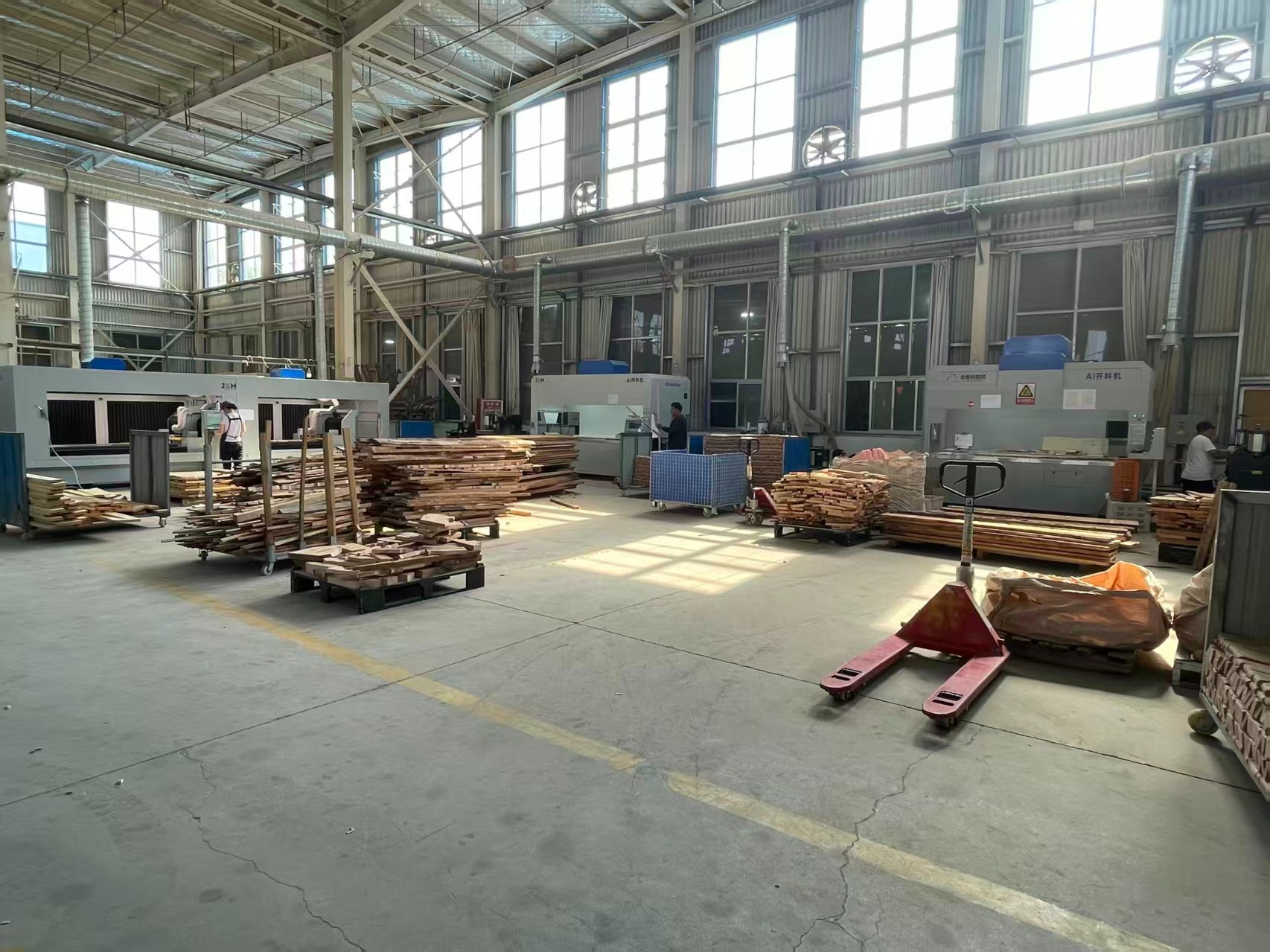
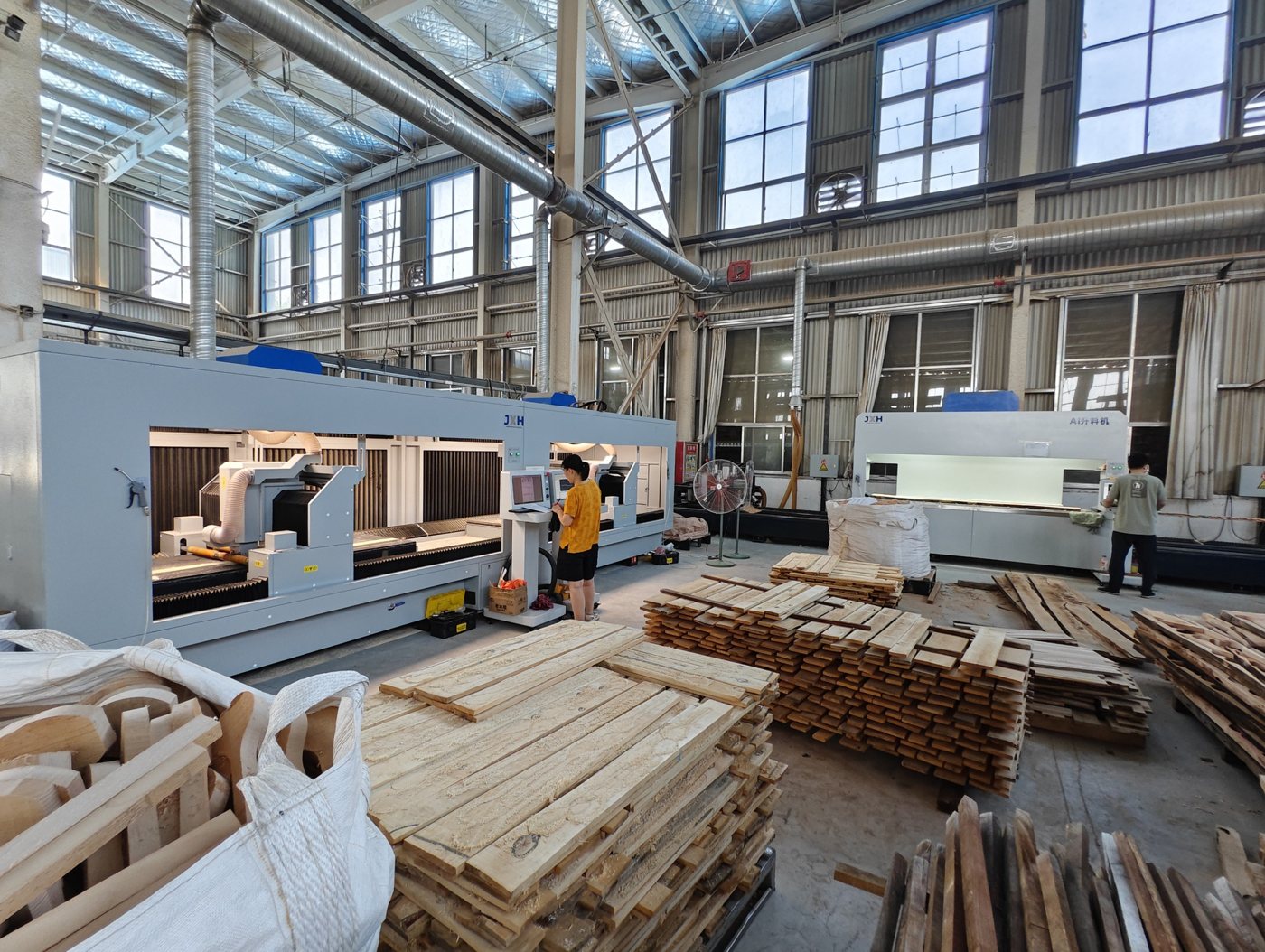
The customer has expanded from the three machines in our earlier case study to four JXH machines operated by five people. The approach is to match each board and product to the right preparation route, then recover suitable tail stock for smaller parts.
1. Where the traditional spoon-making process creates extra work
Manual marking → crosscutting → band-saw blank cutting → copy shaping
During marking, an operator must position the spoon template, consider grain direction and visible defects, and leave enough stock for later machining. Crosscutting breaks the board into manageable lengths. The band-saw operator then follows the outline, and the copy shaper removes the remaining allowance to form the required profile. The sequence can vary with the product.
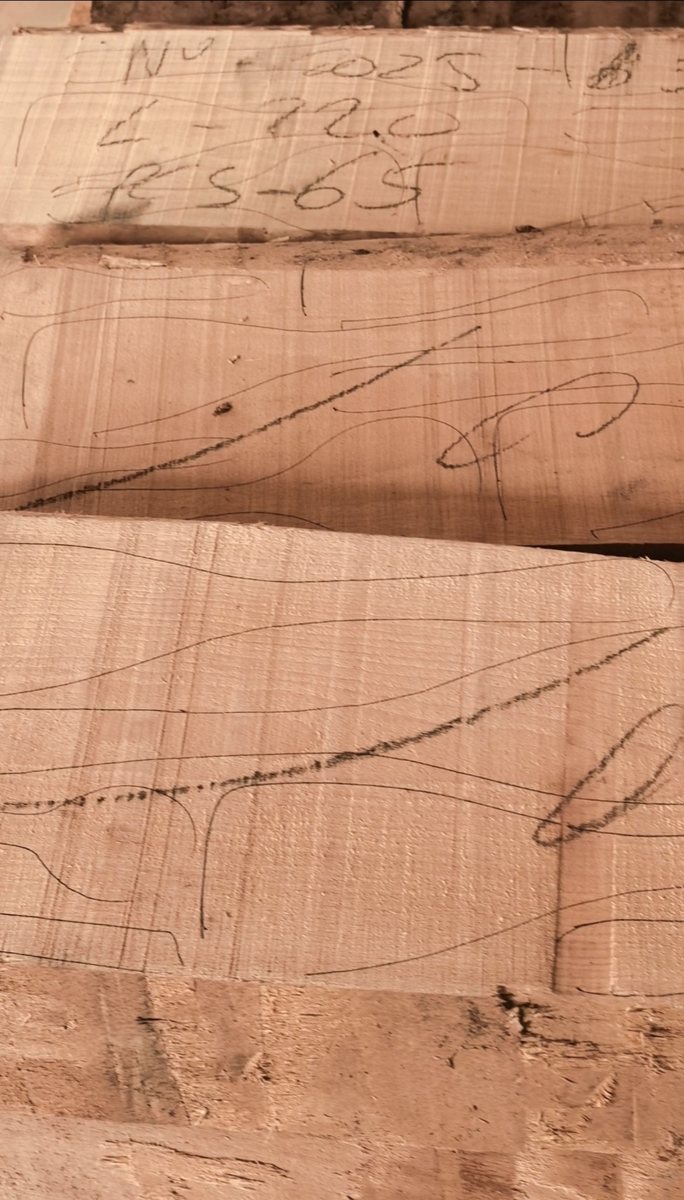
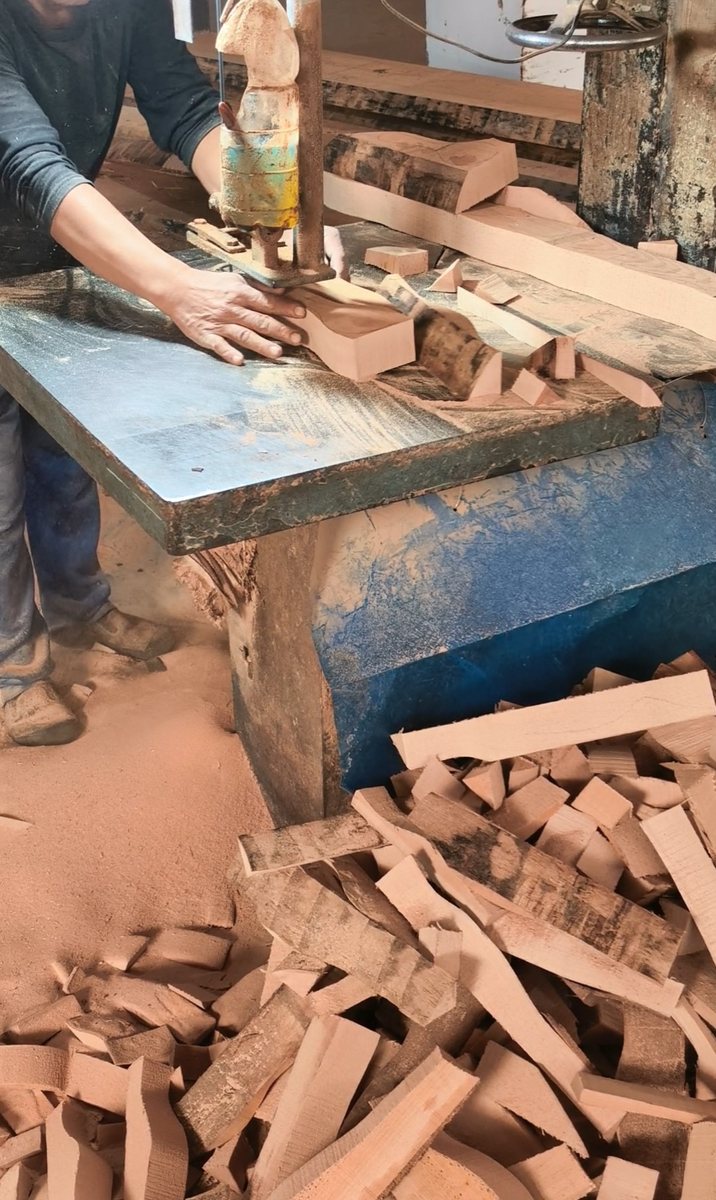
- Material yield depends on repeated manual decisions. Layout spacing, defect avoidance and allowances vary between operators and boards.
- Preparation requires several handling stages. Marking, crosscutting, sawing and transferring blanks occupy people before downstream machining begins.
- Extra allowance becomes downstream work. Generous or inconsistent band-saw allowances consume wood and increase subsequent shaping.
- Product changes require new layout decisions. Mixing large and small spoon or spatula profiles is harder to organize consistently by hand.
- Manual profile sawing creates repeated exposure to the cutting area. Reducing these operations can reduce related exposure while machine guarding and operating procedures remain necessary.
2. The customer's current four-machine configuration
| Equipment | Quantity | Main role in this factory |
|---|---|---|
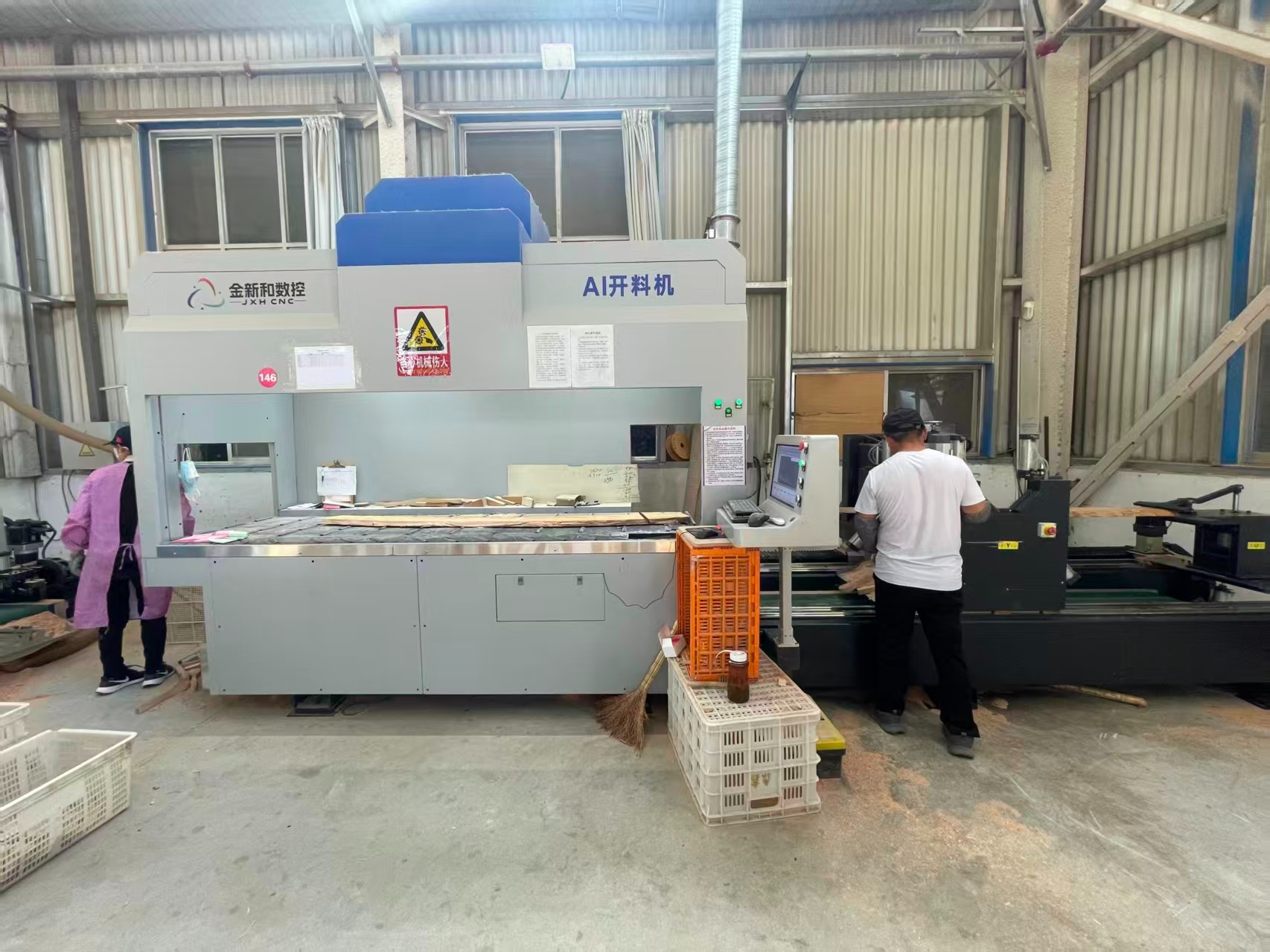
| Single-station AI Cutting Machine | 1 | Thicker solid wood boards for spoon and other shaped blanks. |
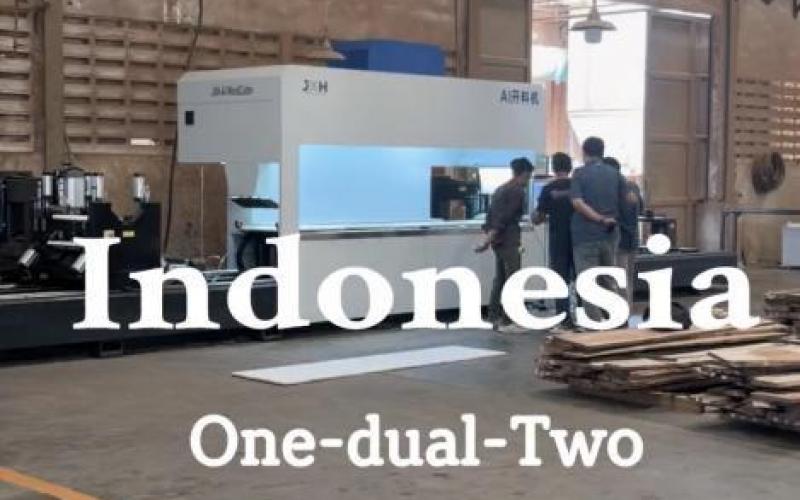
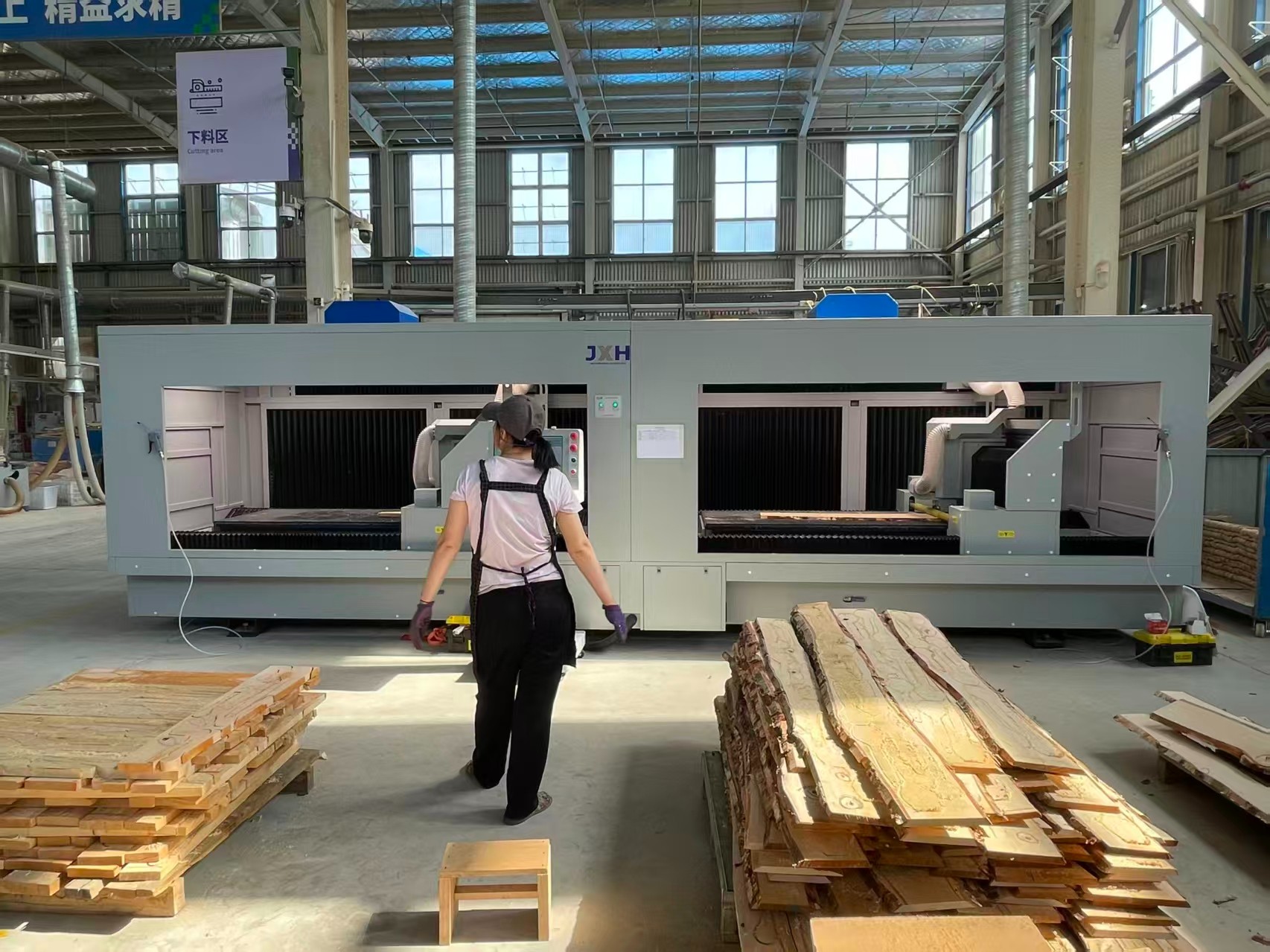
| Dual-station AI Cutting Machine (One-Drives-Two) | 1 | Thick-board batch preparation using two cutting stations. |
| Dual-station AI CNC Router | 2 | Thin boards, suitable remnants, small parts and glued-panel lids. |
The AI workflow scans board outlines and visible defects and nests the required profiles according to the product list and quality rules. Operators still load the stock, review the result and manage collection and transfers. Visible-surface scanning should not be interpreted as inspection of every internal defect.
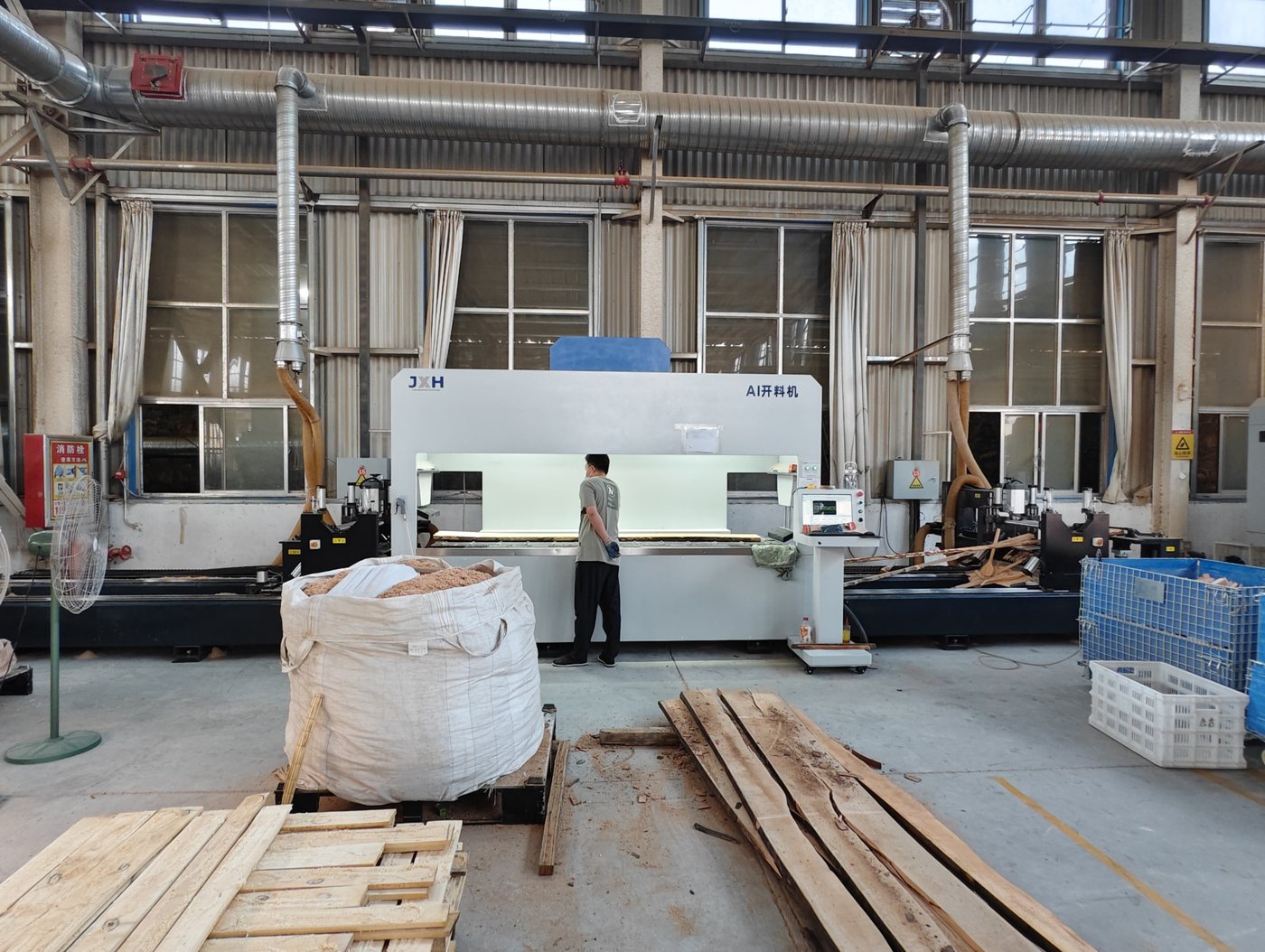
Wood species and thicknesses processed by this customer
| Species | Customer's stock range | Preparation approach |
|---|---|---|
| Beech | 18-70 mm (1.8-7.0 cm) | Separate thick- and thin-board routes. |
| Acacia | 15-60 mm (1.5-6.0 cm) | Select by thickness, profile and panel construction. |
| Birch | Up to 30 mm (3.0 cm) | Mainly thin-board preparation. |
| Other solid woods | According to incoming stock | Confirm suitability with representative trials. |
These ranges describe the customer's reported production. Confirm the appropriate machine setup through trials with your own wood and parts.
3. Thick boards: cut the outline first, then resaw as needed
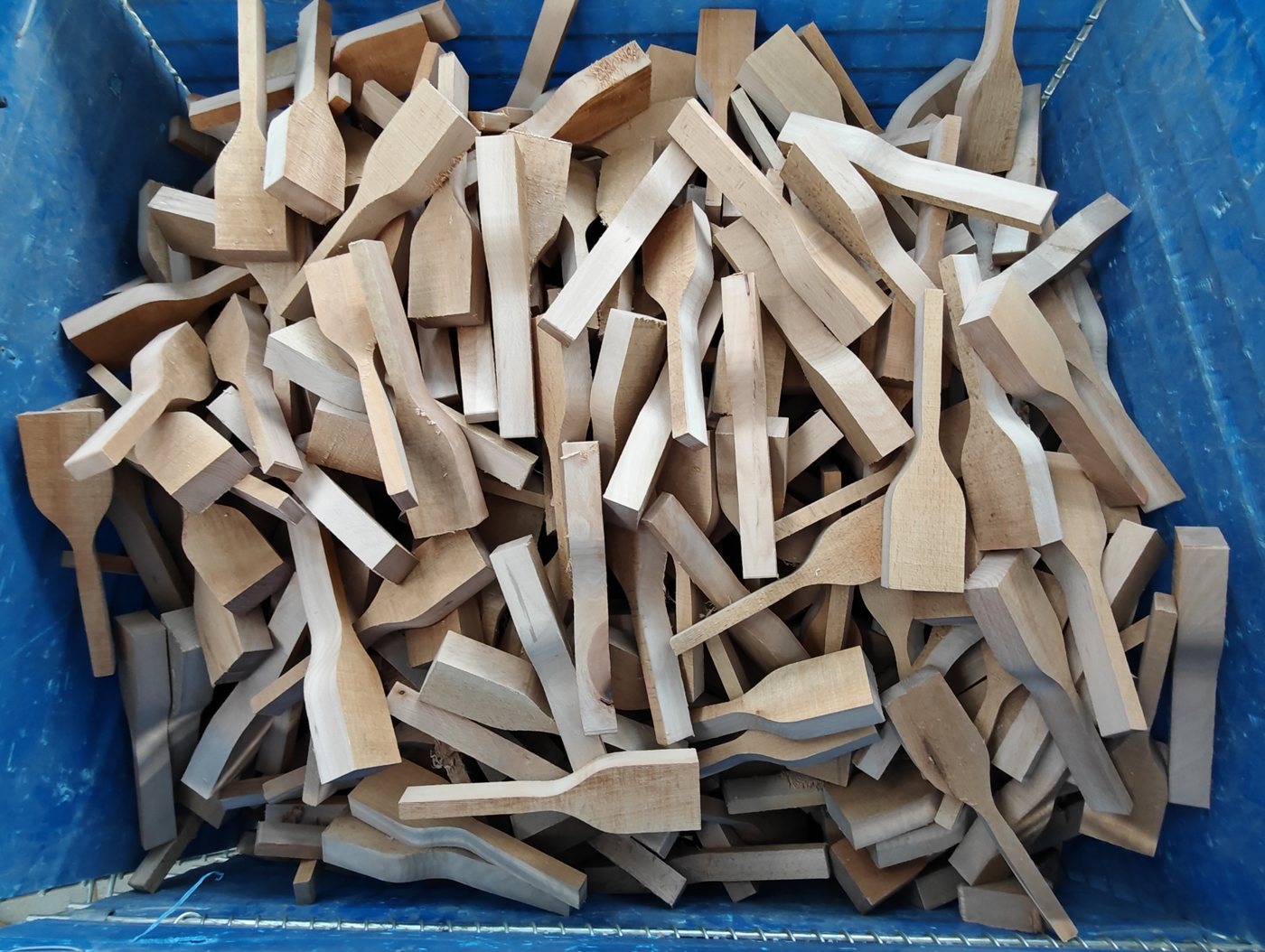
For boards thicker than 30 mm, the customer mainly uses the single-station AI cutter and the One-Drives-Two machine. Typical parts include thick spoon blanks and round blanks. Different sizes can be combined in the layout to use suitable areas of the board.
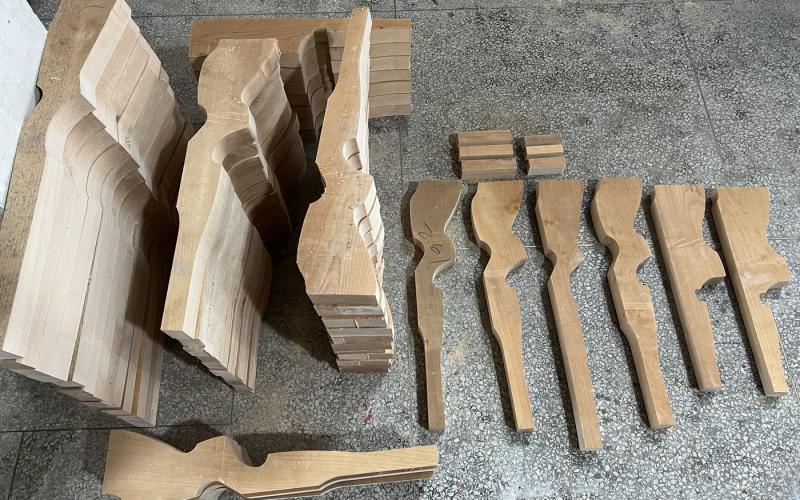
One example is a 60 mm beech spoon blank. After AI profile cutting, the customer uses a band saw to resaw it into three layers and then sends those blanks to copy shaping. The usable thickness of each layer allows for saw kerf and subsequent machining.
4. Thin boards: CNC profiles with a retained bottom skin
For spoons with a relatively shallow curve, the customer can start with thinner stock. In this factory, boards up to 30 mm are treated as thin boards. At 20 mm and below, the AI CNC Router is generally the first choice. Between 20 and 30 mm, either AI cutting or CNC routing may be suitable, depending on the shape, board condition, secure holding and trial result.
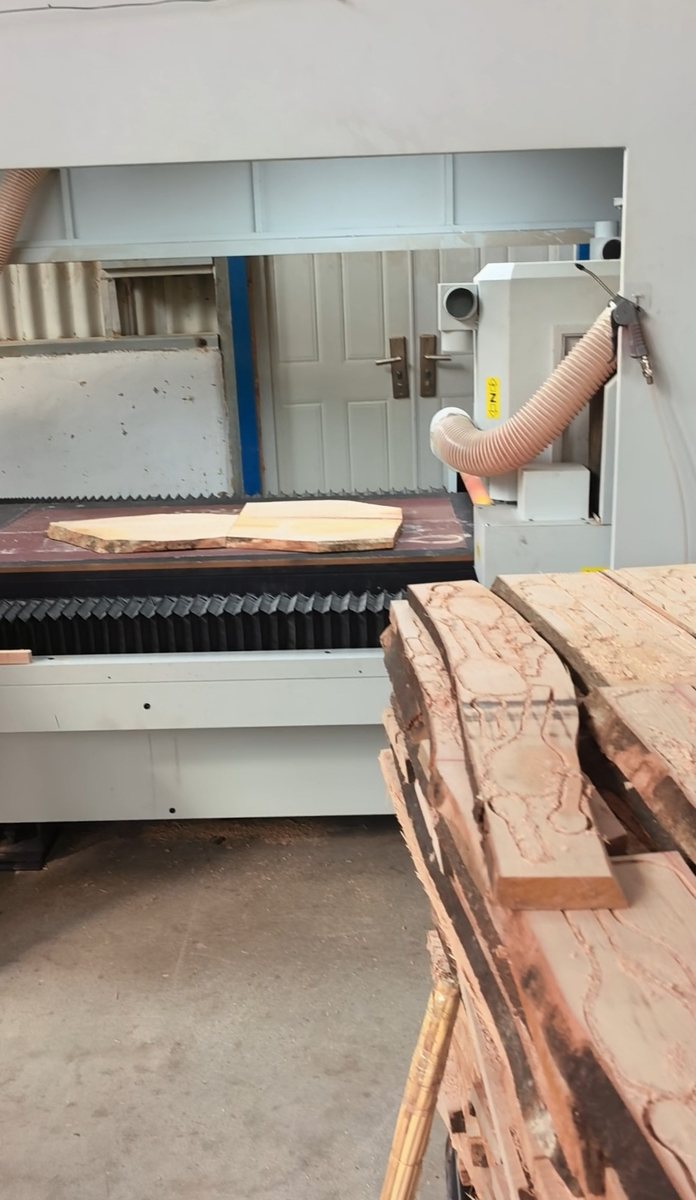
The customer's CNC route does not cut completely through the board. A thin bottom skin keeps the blanks connected. Operators collect and stack the routed boards, then process a batch through a conveyor-fed single-sided thickness planer to remove the skin and release the blanks.
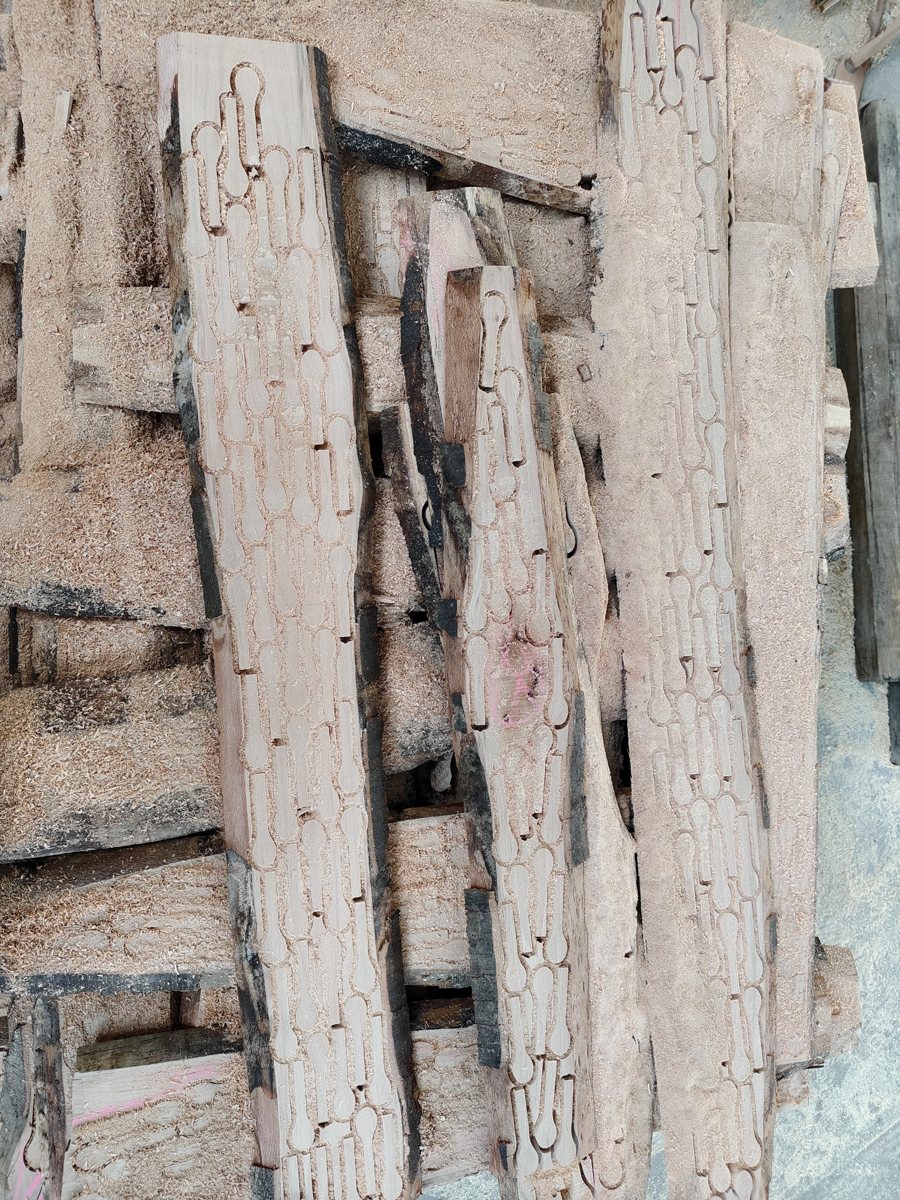
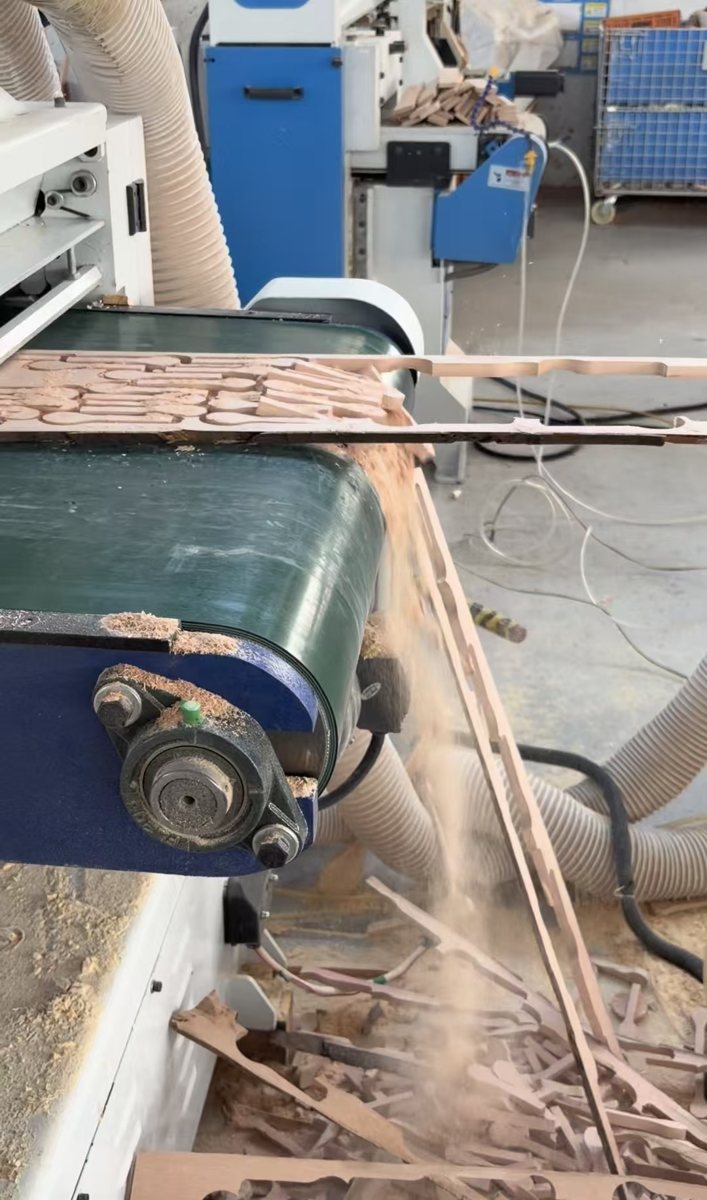
Scan and nest → CNC route with a bottom skin → collect and stack → batch plane → downstream shaping and finishing
Skin thickness and the release process must be matched to the board, tooling, holding method and planer arrangement. The output is a blank; bowl hollowing, copy shaping, sanding and finishing continue as required by the product.
5. Tail stock becomes feedstock for smaller kitchenware
The AI cutting process in this case leaves at least about 70 mm at the board tail. The customer deliberately reserves about 200 mm of additional stock to create a useful area for smaller products, then routes suitable pieces on the AI CNC Router.
The reserved length is matched to the customer's smaller products. Actual tail length and holding limits should be set for the machine and job.
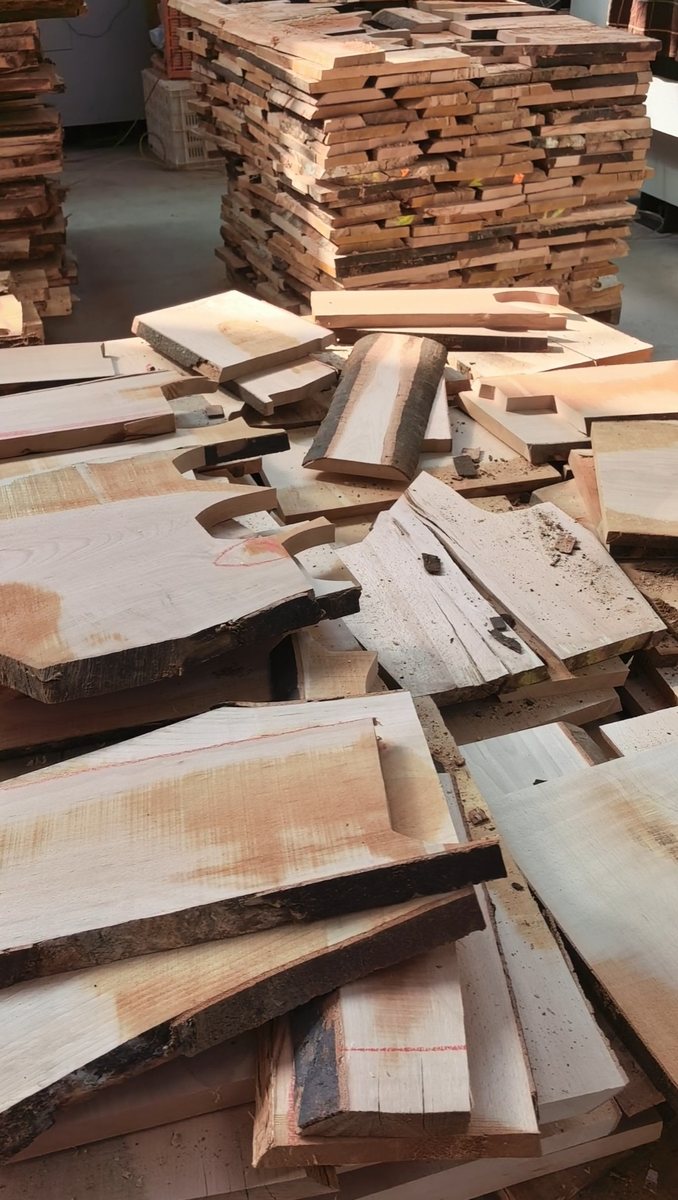
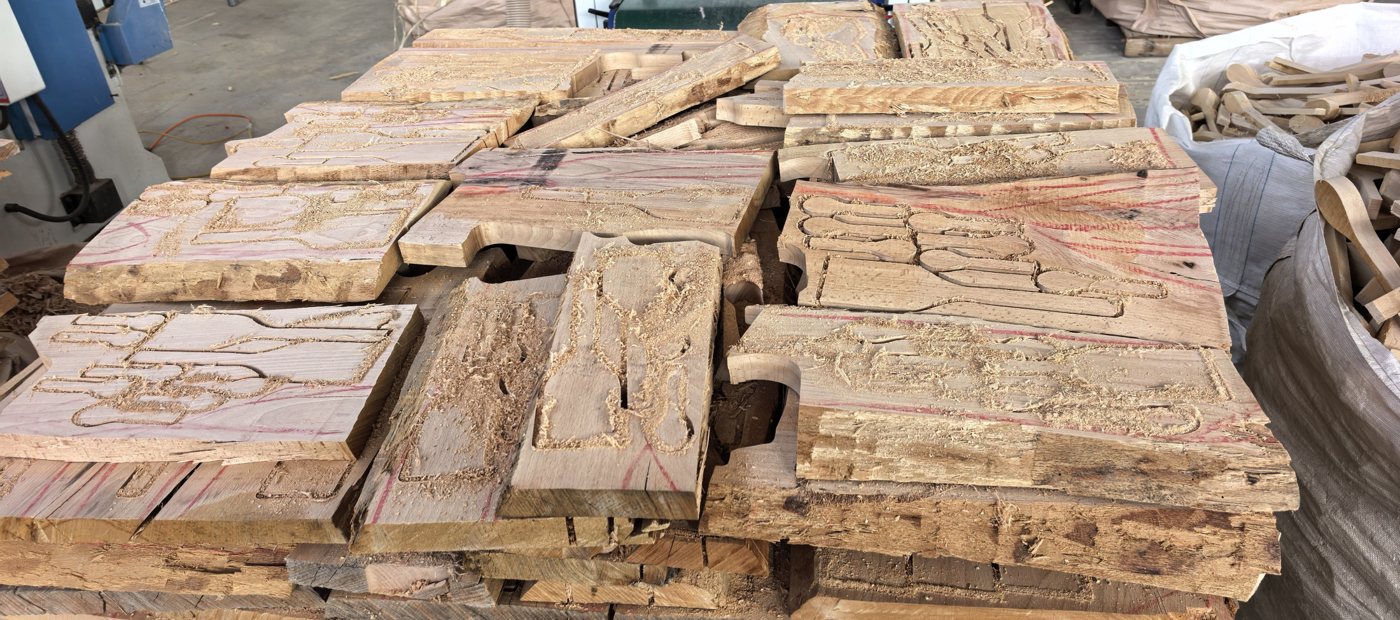
- Thin remnants: prepare and secure suitable pieces for CNC machining into small spoons or other parts.
- Thick remnants: first resaw into thinner boards on a band saw, then use the CNC route.
The practical benefit is recovery of usable material with fewer repeated marking and manual profile-sawing operations. Saw kerf, machining allowance and unsuitable defects still create material loss.
6. Cup lids: nest different diameters on suitable glued panels
The customer also produces cup lids in different sizes from glued solid wood panels. The panel outline does not have to be trimmed into one standard rectangle for every job, or crosscut into many small squares before copy shaping. AI nesting can arrange the required lid diameters within the usable panel area.
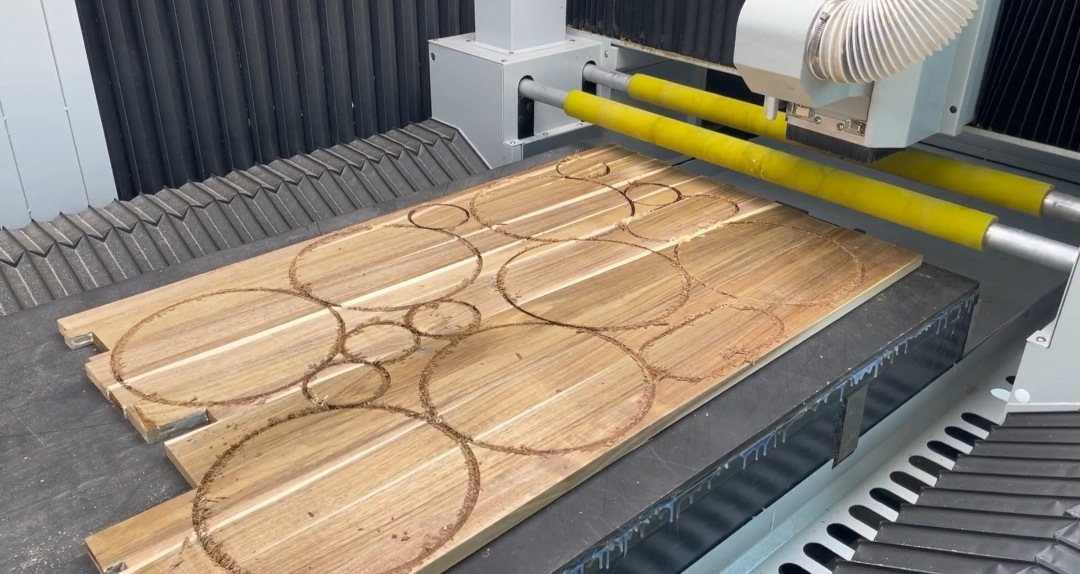
Flexible panel assembly still needs suitable joint quality, flatness and secure holding. The CNC Router can also machine holes according to the drawing. The supplied factory photos show two smaller boards arranged on a single worktable; each board needs reliable fixing and appropriate tool clearance.
7. Customer-reported results for the updated workflow
The former preparation team covered marking, crosscutting, band-saw blank cutting and some copy-shaping work. The staffing comparison applies to this preparation scope. Downstream operations have their own staffing requirements.
The yield gain reflects the customer's assessment of the combined workflow: nesting different part sizes, controlling unnecessary allowance and recovering useful remnants. The customer has not specified whether 12-15% is a relative increase or a percentage-point gain, so no material-cost saving is calculated from that estimate.
Current configuration and operating feedback were supplied on 20 October 2026. This update supersedes the earlier three-machine case figures. The earlier staffing and productivity figures are not combined with the current results.
8. Faster preparation changes the next production priority
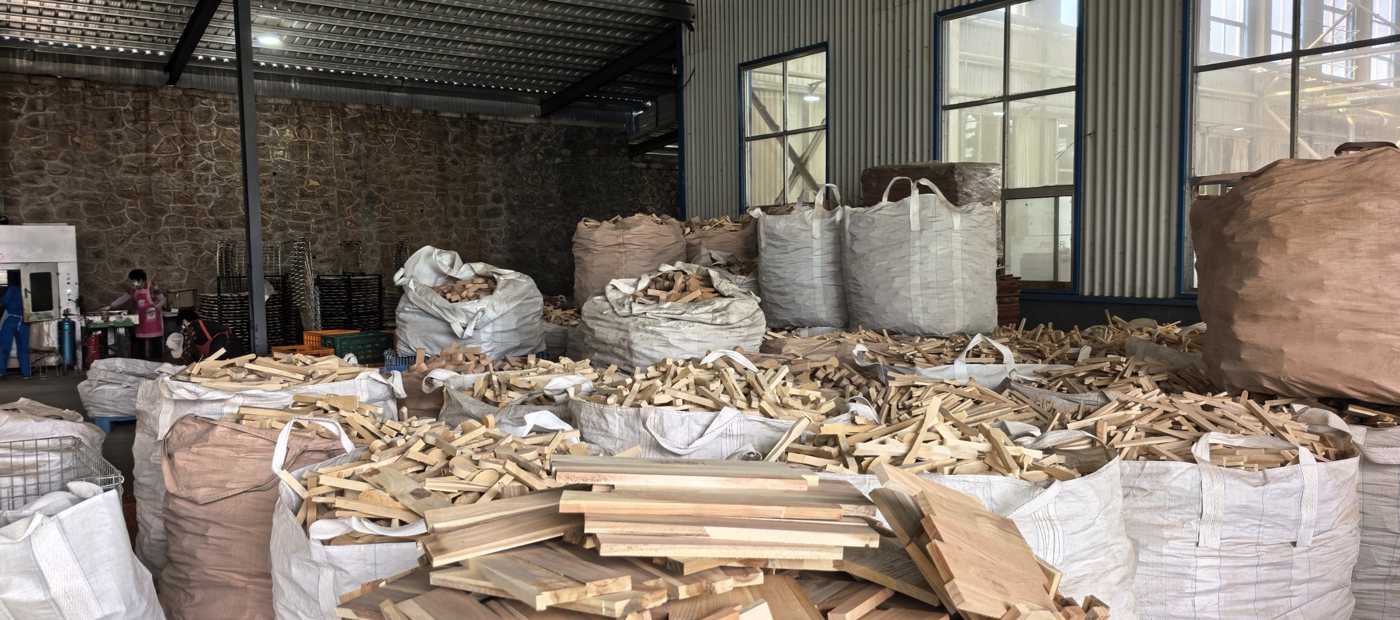
The factory now collects substantial batches of spoon, spatula and other kitchenware blanks. The customer reports that downstream processing sometimes cannot keep pace with blank preparation. The next planning question is therefore how to match resawing, planing, shaping and sanding capacity to the front end.
The four-machine mix is this factory's working example. A new project should be sized from the actual order mix, material quality, measured cycle times and accepted blank output.
Choosing a route for a similar kitchenware factory
| Stock or product | Route used in this case | Next operation |
|---|---|---|
| Thick spoon and round blanks, above 30 mm | AI Cutting Machine or One-Drives-Two | Resaw if required, then shape. |
| Thin parts, 20 mm or below | AI CNC Router preferred | Retain skin, batch plane and finish. |
| Shallow profiles, above 20 mm and up to 30 mm | Compare AI cutting and CNC trials | Select for quality and overall line flow. |
| Usable remnants | Resaw thick pieces first; route suitable thin pieces | Return smaller blanks to downstream production. |
| Glued-panel lids, holes and multiple small boards | AI CNC Router to the drawing and holding plan | Release blanks and complete lid machining. |
Discuss your wooden kitchenware process with JXH
Send your wood species, thickness range, board photos, product drawings or samples, target quantities and current preparation workflow. JXH can help evaluate thick-board cutting, thin-board CNC routing and remnant recovery as one connected process.